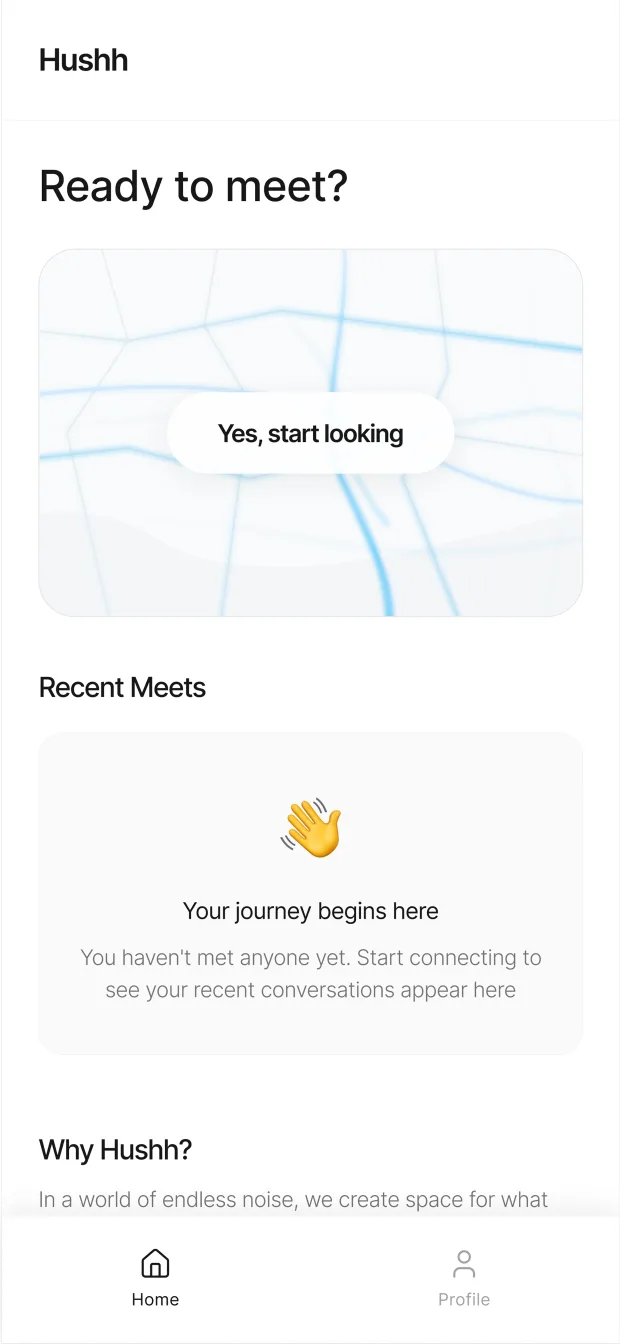
Hushh matches people who are new to a city into small groups that actually meet, in person, at a real venue, within days. I designed it, built it in React Native and Firebase, and ran a pilot in Bangalore and Pune. Solo.
Move to a new city for work and the loneliness is immediate, but the tools built to fix it are dating apps. They are designed to keep you swiping, not to get you out the door and in front of a person. You optimise a profile, trade small talk, and rarely actually meet.
The category is quietly cracking. People are burned out, the incumbents are shrinking, and a generation raised on these apps is the loneliest one yet. The appetite for something that just gets you into a room with real people has never been higher.
Sources: Forbes on the post-swipe shift (2026); Cigna loneliness research; company filings. The two most-talked-about alternatives, 222 and Timeleft, both seat strangers in groups of about six over a meal — almost exactly the model I had already built and piloted, alone.
Every social app is built on the same three things: a photo-first profile so you judge on looks, an endless swipe so there is always someone better one card away, and a chat thread that has to be crossed before anyone commits. All three are brilliant at holding attention and terrible at getting two people into the same room.
So I took all three out. The bet was simple and a little frightening: whatever is left has to carry the entire product on its own.


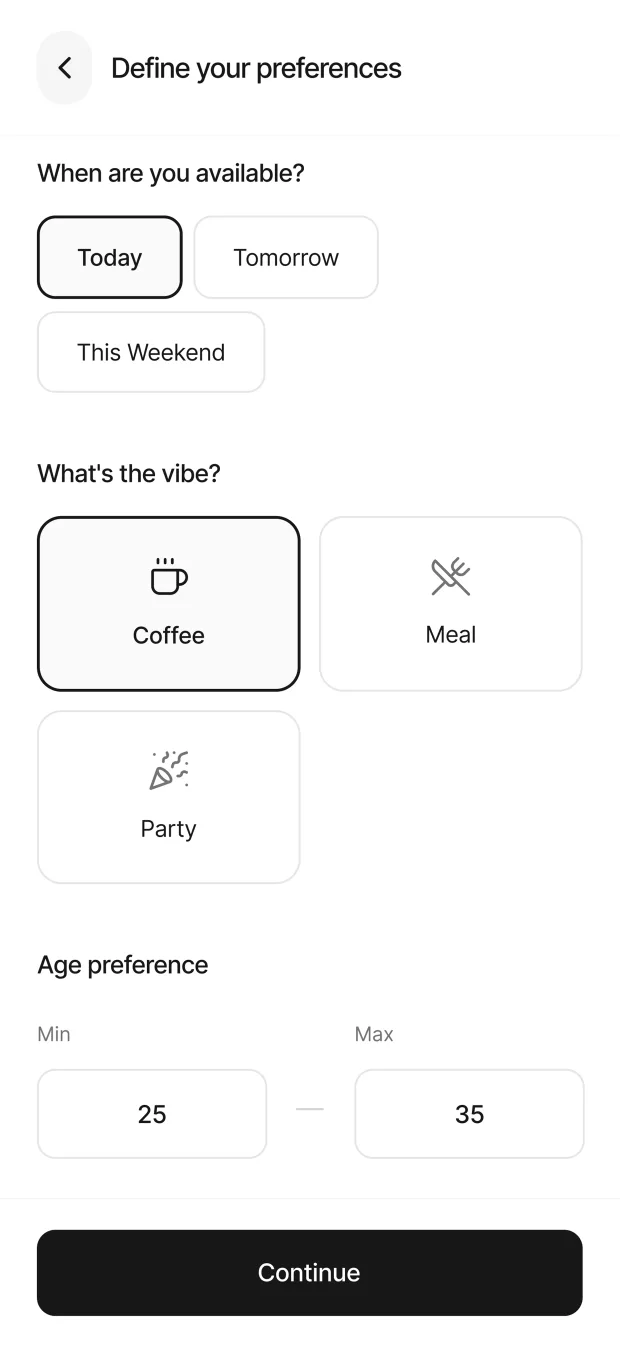
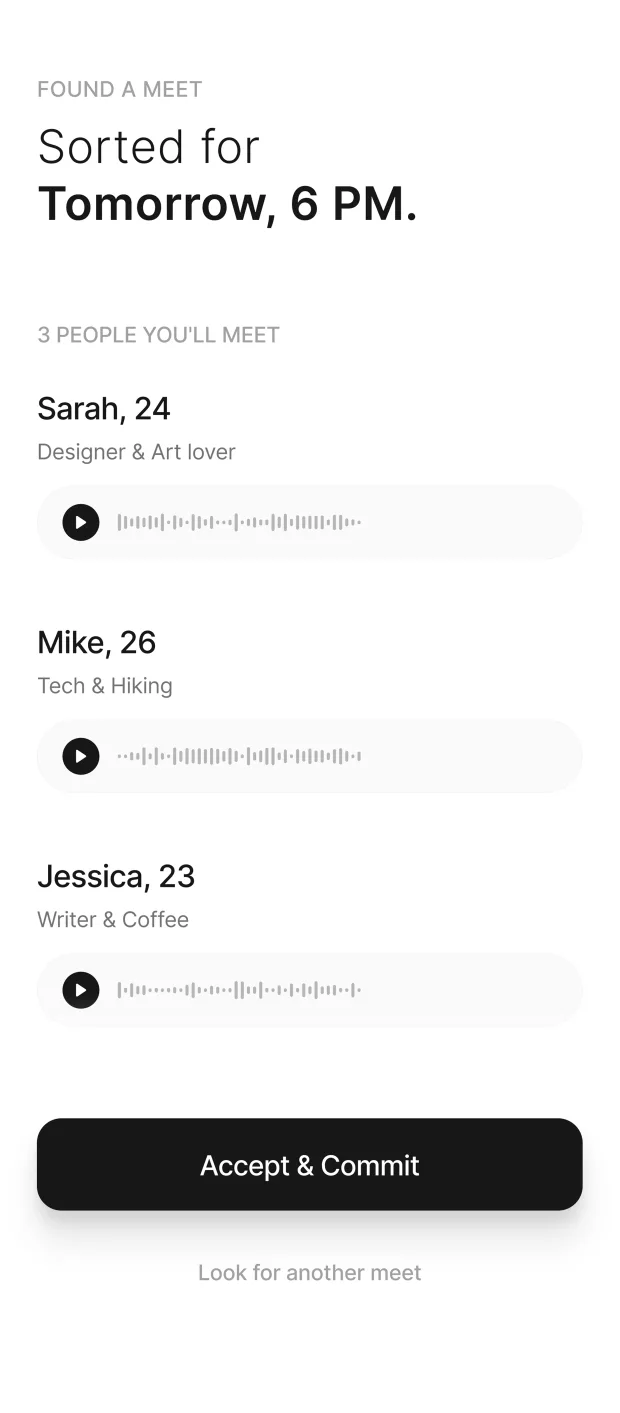
With the usual crutches gone, every remaining decision had to earn its place. Four moves do the work the swipe used to do — deciding who you meet, and whether you trust it enough to show up.
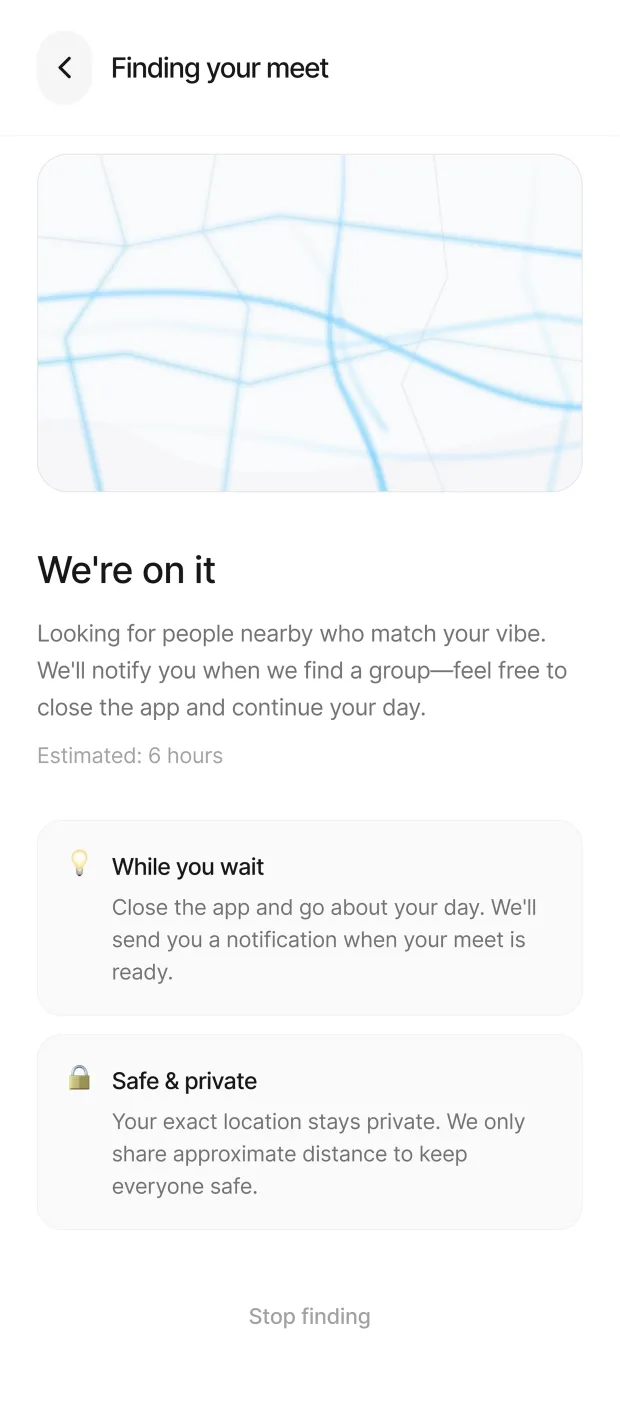
Behind the calm surface is a matching system I designed and built. A single request turns into a confirmed table through a fixed set of moves, and a fixed set of rules decides who lands in a group together.
The matching engine, the acceptance logic, the venue and refund rules — all of it I built myself in React Native and Firebase, then watched it run with real people in a live pilot. Designing it and shipping it were the same job.
Before any of this was an app, I ran it manually. I pulled about sixty people into a WhatsApp group across Bangalore and Chandigarh, and played the matching engine myself — reading who wanted what and stitching groups together from people I knew and people my friends knew but I didn't. Four real meets came out of it: three in Chandigarh, one in Bangalore. Strangers who had never met sat down for an evening, and a friend-of-a-friend was all it took to get them to show up.
What people kept coming back to was the thing I was most nervous about — how little there was to it. No profile to tend, no feed to scroll, no app to live inside. You say you want to go out and meet someone, and that's the entire interaction. Hushh was built to get you off your phone and into a room, and that turned out to be the exact reason people trusted it.
“Honestly the best part is there's nothing to do. You say you're free, and you just end up at a table with people. It never feels like using an app.” — pilot participant, Chandigarh
The hard part was never deciding what to add. It was having the conviction to remove the things everyone expects, and trusting that a voice, a small group and a booked table were enough to make two strangers actually show up.
If you've read this far, the rest is better felt than described — the quietest, most human way I know to meet someone in a new city. Come try it yourself.